Family doesn’t always fit neatly into legal definitions.
Some families are formed through birth. Others through adoption. Many include stepchildren, blended families, or relationships that have grown over decades. While the love may feel exactly the same, the law doesn’t always treat every family relationship the same way.
That’s one of the reasons estate planning is so important. Many people are surprised to learn that Ohio’s inheritance laws don’t always match what they assume will happen after they’re gone.
As both a paralegal who helps families create estate plans and an adoptive mom, I’ve experienced this from two different perspectives.
When we finalized our daughter’s adoption, there was one moment during the hearing that sticks out to me now with estate planning.
The magistrate carefully explained that once the adoption was finalized, our daughter would legally become our child in every sense of the word. She would become part of our line of descendants and would inherit from us just as if she had been born into our family.
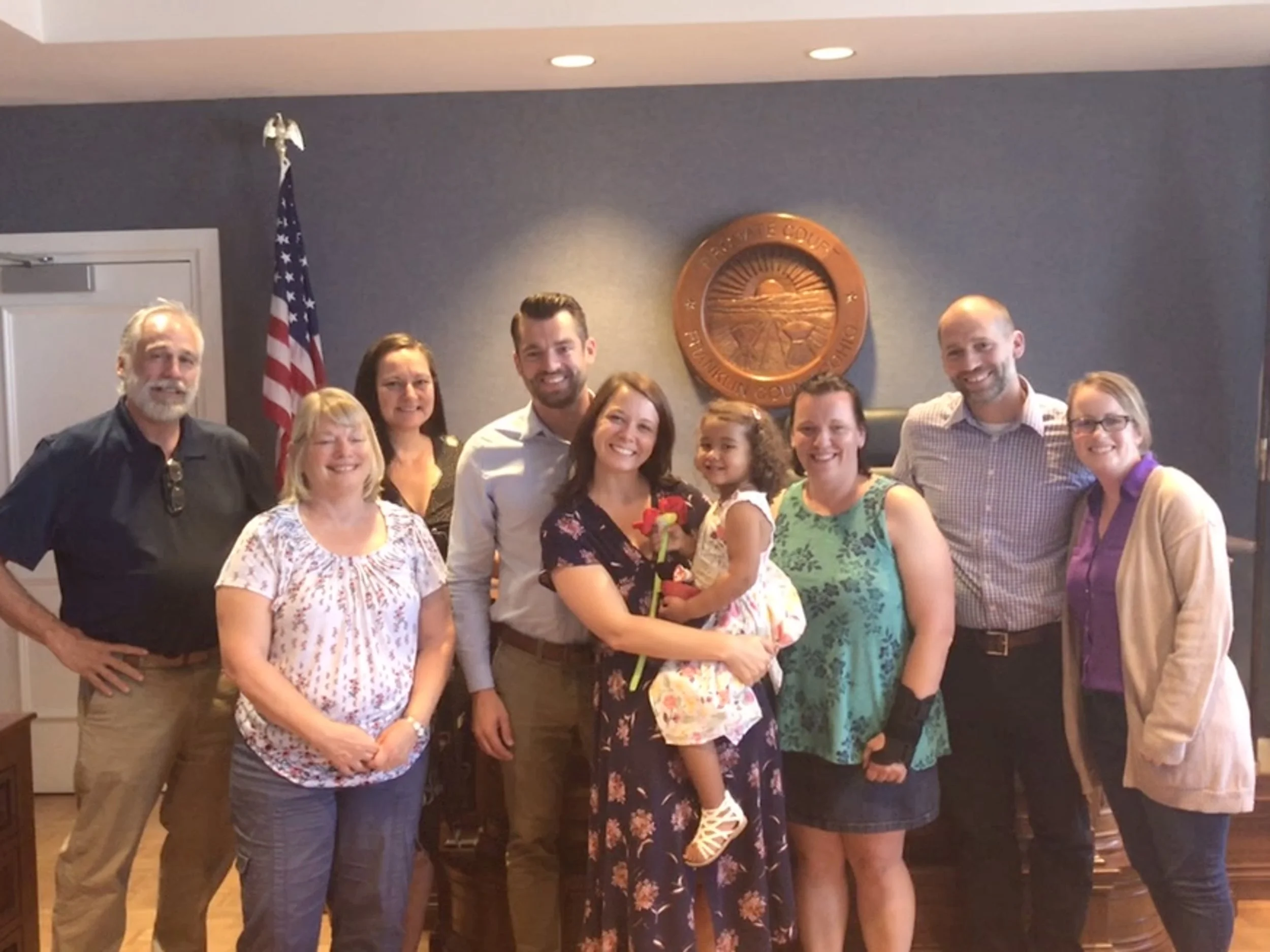
I remember thinking, Of course she would.
That’s exactly why we were there.
But looking back, I’m grateful the court took the time to explain it. While it felt obvious to us, that legal distinction can have significant consequences for estate planning, especially for blended families and anyone who assumes the law automatically recognizes every parent-child relationship the way their heart does.
Whether your family was formed through adoption, remarriage, or a combination of both, understanding how Ohio law views parent-child relationships can help ensure your estate plan reflects your wishes.
Adopted Children Have the Same Inheritance Rights as Biological Children
Under Ohio law, once an adoption is finalized, the adopted child is treated the same as a biological child for inheritance purposes.
That means if your will leaves your estate equally among your “children” or your “descendants,” your legally adopted child is included just like any biological child would be.
Likewise, if you were to pass away without a will, an adopted child generally has the same inheritance rights under Ohio’s intestacy laws as a biological child.
For our family, this wasn’t simply a legal technicality, it was exactly what we wanted. Our daughter is our daughter, and the law recognizes her as such.
Stepchildren Are Different
One of the biggest misconceptions we hear is that marrying someone automatically gives your stepchildren inheritance rights.
It doesn’t.
Unless you legally adopt your stepchild, they generally do not inherit from you simply because of your marriage.
This surprises many people.
Imagine a couple who have been married for twenty years. One spouse has helped raise the other’s child since kindergarten. They attend every soccer game, pay for college, and think of that child as their own.
If that stepparent dies without an estate plan, the law does not automatically recognize that relationship for inheritance purposes.
If you want a stepchild to inherit, you generally need to:
Include them in your estate planning documents,
Name them as a beneficiary on appropriate accounts, or
Legally adopt them.
Without taking one of those steps, your wishes may not happen automatically.
Adoption Can Change More Than Just One Generation
Another important point many people don’t consider is that adoption affects future generations as well.
Estate planning documents often refer to “descendants,” “issue,” or “lineal descendants.” These terms don’t just refer to your children, they can also include grandchildren and future generations.
Because an adopted child becomes part of your legal line of descendants, their own children generally become part of that family line as well for estate planning purposes.
This is one reason it’s so important that your documents use language that matches your family’s circumstances.
Beneficiary Designations Still Matter
Even though adoption establishes inheritance rights, beneficiary designations still control many assets.
Life insurance policies, retirement accounts, transfer-on-death designations, and payable-on-death accounts pass according to the named beneficiary, not according to your will.
That means it’s important to review these designations after an adoption to make sure they reflect your growing family.
We’ve worked with many families who updated their wills but forgot about retirement accounts or life insurance policies that still listed outdated beneficiaries.
Every Family Looks Different
One of the things I love most about estate planning is that no two families look exactly alike.
Some families include biological children.
Some include adopted children.
Some include stepchildren.
Some include all three.
The law has default rules, but those rules don’t always match your family’s story.
Estate planning gives you the opportunity to make sure your documents reflect the people who matter most to you.
Final Thoughts
Looking back, I’m grateful the magistrate took the time to explain what adoption meant from a legal perspective. It wasn’t because we questioned whether our daughter was truly ours. We never did. It was because the law wanted to ensure we understood the legal rights and responsibilities that came with finalizing her adoption.
That’s exactly what good estate planning does, too. It takes the time to make sure your legal documents match your intentions.
Whether your family was formed through adoption, remarriage, or another unique path, your estate plan should clearly reflect the people you love and the legacy you want to leave.
Contact us today to help create a custom plan that fits your family and needs.